Modular by design: what Framework teaches us about sustainable tech
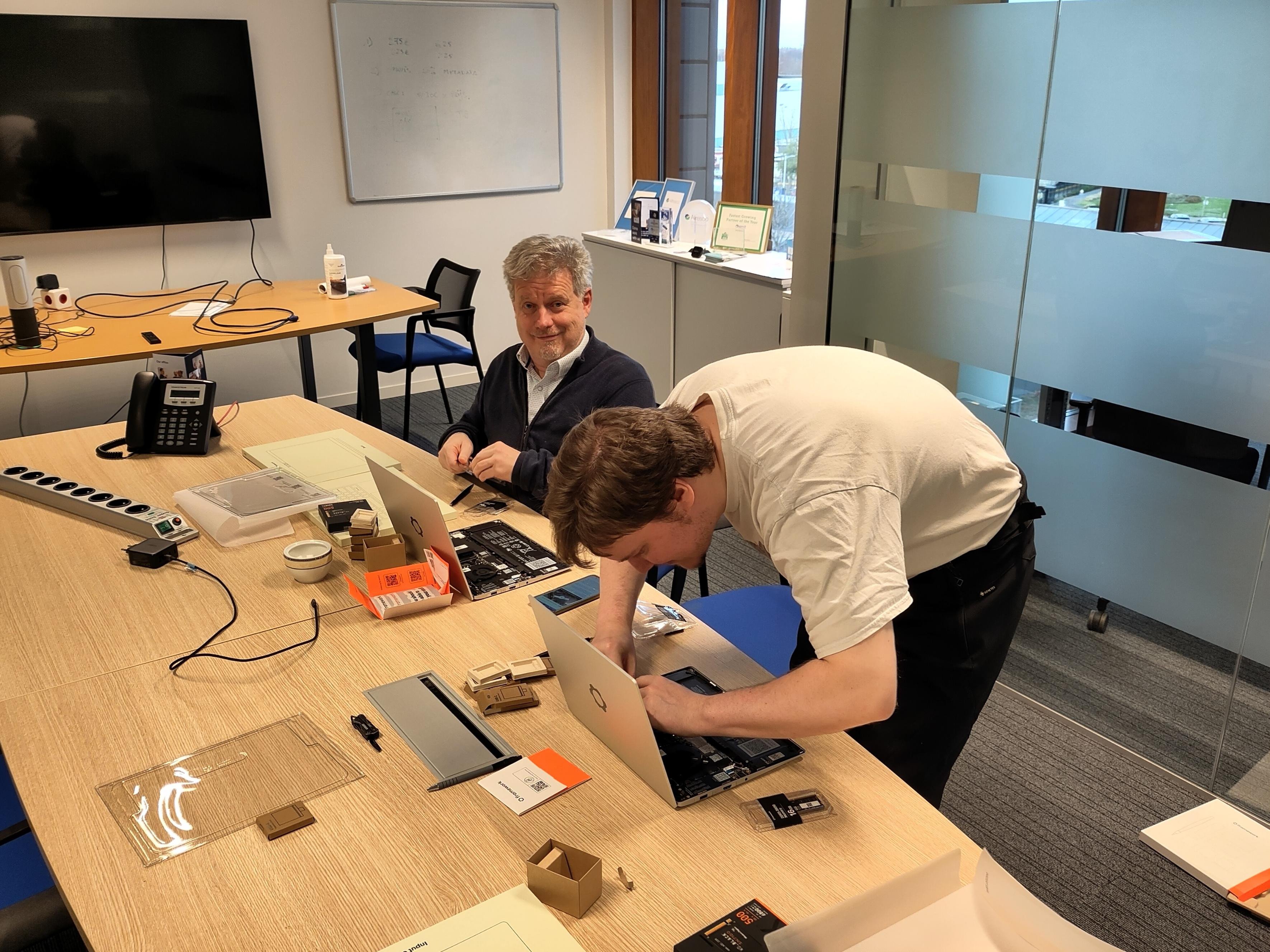
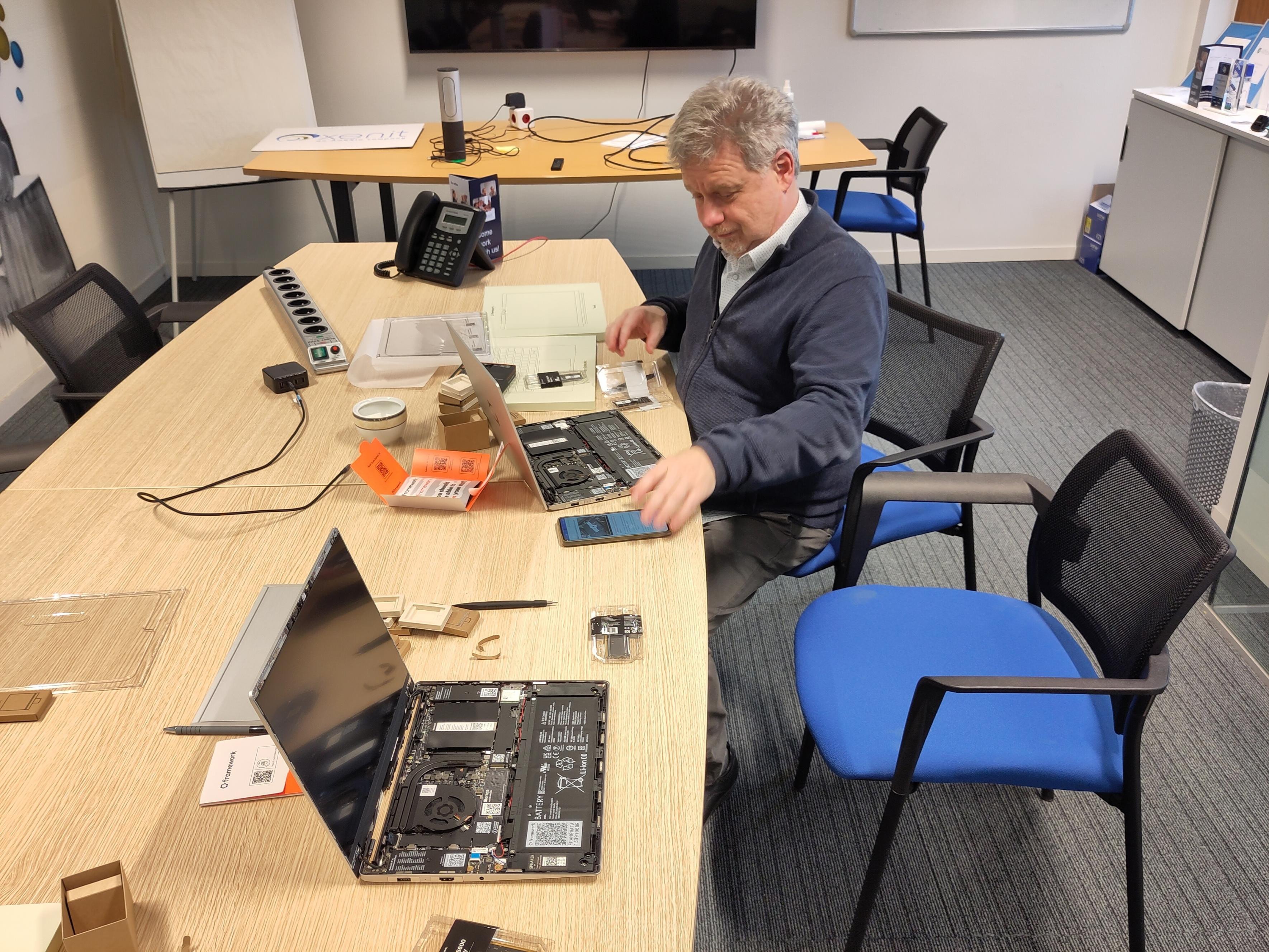
At Xenit, we love technology that’s built to last. Systems that you can understand, adjust, and continually improve rather than replace. Recently, two of our colleagues embodied that philosophy in a very tangible way: Ronny and Robrecht assembled their own Framework laptops, component by component, like modern-day LEGO for hardware enthusiasts.
For those unfamiliar, Framework laptops are built around modularity and repairability. Instead of throwing away an entire device when one part becomes outdated or breaks, you simply replace the module. Need more memory? Swap it. Battery wearing out? Replace it. Keyboard layout preference? Switch it. These laptops are designed with longevity in mind, not disposability.
And that mindset resonates deeply with us.
Why modularity matters - not just for techies, but for the planet
Ronny and Robrecht didn’t just build laptops. They built future-proof machines.
Modularity → Longer device lifespan
Repairability → Less electronic waste
Upgradability → Better performance without starting over
It’s a shift from disposable electronics toward technology as a durable good: something you maintain and extend over time, rather than discard. The fact that you can open the laptop with a simple screwdriver and replace every critical component is a refreshing alternative in a world of sealed-shut devices.
This is sustainability through engineering, not marketing.
A philosophy we recognize in our own work
Xenit has always believed that technology should empower, not restrict.
That it should adapt, scale, and remain under your control.
It’s why ContentGrid, built on open-source foundations, is designed to be modular in the same spirit as Framework hardware. Instead of one monolithic system that locks you in, ContentGrid integrates building blocks that can be replaced, expanded, or optimized as needs evolve.
Just like a Framework laptop, it grows with you.
Scalability without waste.
Ongoing value instead of technical debt.
Open, flexible, and future-ready.
Different domains, hardware and cloud, but the same principle:
Give people the freedom to build, customize, and improve.
What’s next?
Ronny and Robrecht are already tinkering with upgrades: more RAM here, a new expansion card there. And if a part ever fails? No problem, repair takes minutes, not weeks.
Their DIY build sparks a bigger question for us internally:
What if more of the tech we use (and create) followed this model?
What if sustainability was not an afterthought, but a design choice?
At Xenit, we’re committed to exploring that direction, not only through tools like ContentGrid, but through the way we choose, build, and value technology.
Sometimes innovation isn't about inventing something new.
Sometimes it’s about building it differently.

A leap forward
ContentGrid V2 is built for speed, scale, and intelligence. By aligning with PostgreSQL 18 at the core, introducing rich bidirectional navigation, embedding AI for search and stability, and delivering unmatched cost efficiency, V2 redefines what a content services platform can be.
Our ambition is clear and simple: to be the fastest content services platform in the world. ContentGrid V2 is the step that brings us closer to that vision.